Proper ventilation is one of the most important yet often overlooked aspects of maintaining a healthy home. Whether you live in a timber-frame house, a log cabin, or a traditional home with wooden structural elements, good airflow helps regulate indoor moisture, improve air quality, and preserve the condition of wooden materials. When ventilation is inadequate, humidity can build up inside the property, creating conditions that encourage mold growth and, in some cases, make timber more susceptible to certain wood-damaging pests.
It is important to understand that poor ventilation does not directly cause mold or pest infestations. Instead, inadequate airflow contributes to excess moisture, which creates an environment where mold can thrive and where some wood-boring insects may find timber more suitable for infestation. By improving ventilation and controlling humidity, homeowners can significantly reduce these risks and extend the lifespan of their wooden structures.
Why Ventilation Matters
Everyday household activities release moisture into the air.
Common sources include:
- Cooking
- Showering
- Washing dishes
- Drying clothes indoors
- Houseplants
- Breathing
- Minor plumbing leaks
Without proper ventilation, this moisture remains trapped inside the home, increasing indoor humidity.
How Poor Ventilation Increases Humidity
When moist air cannot escape, condensation forms on cooler surfaces throughout the property.
Common locations include:
- Windows
- Exterior walls
- Roof timbers
- Ceiling beams
- Window frames
- Basements
Over time, persistent moisture can affect wooden structures and interior finishes.
How Moisture Leads to Mold Growth
Mold requires three basic conditions to grow:
- Moisture
- Organic material such as wood
- Suitable temperatures
Wood naturally contains organic material, making it an ideal surface for mold when moisture remains present for extended periods.
Early signs of mold include:
- Black, green, white, or gray patches
- Musty odors
- Surface discoloration
- Damp timber
- Peeling paint or finishes
Removing the source of moisture is essential for preventing mold from returning.
The Connection Between Moisture and Wood-Boring Pests
Wood-boring insects do not appear simply because ventilation is poor.
However, excess moisture may create conditions that are more favorable for certain species.
Examples include:
- Common Furniture Beetle
- Deathwatch Beetle
- Powderpost Beetles
- House Longhorn Beetle
Maintaining dry timber reduces the likelihood of moisture-related deterioration and helps make wooden structures less attractive to many wood-boring insects.
Common Areas With Poor Ventilation
Some parts of a home are naturally more prone to moisture buildup.
Inspect these areas regularly:
- Attics
- Roof spaces
- Crawl spaces
- Basements
- Bathrooms
- Kitchens
- Laundry rooms
- Utility rooms
Improving airflow in these spaces can significantly reduce moisture problems.
Warning Signs of Poor Ventilation
Many ventilation issues develop gradually.
Watch for signs such as:
- Condensation on windows
- Persistent musty smells
- Damp walls
- Mold growth
- High indoor humidity
- Slow drying after cleaning
- Peeling wallpaper or paint
These warning signs often indicate excessive indoor moisture.
How Poor Ventilation Affects Wooden Structures
Long-term exposure to excess humidity may lead to:
- Surface mold
- Fungal growth
- Swelling of timber
- Staining
- Peeling finishes
- Reduced durability
While mold itself usually affects the surface, prolonged dampness can eventually contribute to fungal decay if left unresolved.
Improve Natural Airflow
Simple habits can greatly improve ventilation.
These include:
- Opening windows when weather allows
- Keeping air vents unobstructed
- Allowing space behind large furniture
- Avoiding overcrowded storage areas
Natural airflow helps remove excess humidity from the home.
Use Mechanical Ventilation
Some rooms generate large amounts of moisture and benefit from mechanical ventilation.
Examples include:
- Bathroom exhaust fans
- Kitchen extractor hoods
- Whole-house ventilation systems
- Heat recovery ventilation (HRV) systems where installed
Properly maintained systems improve indoor air circulation and reduce humidity.
Monitor Indoor Humidity
A digital hygrometer makes it easy to monitor indoor humidity levels.
If humidity remains consistently high:
- Increase ventilation.
- Use a dehumidifier where appropriate.
- Investigate hidden moisture sources.
Maintaining balanced humidity helps protect both the building and its occupants.
Repair Moisture Problems Promptly
Ventilation alone cannot solve water intrusion.
Regularly inspect for:
- Roof leaks
- Plumbing leaks
- Damaged flashing
- Overflowing gutters
- Poor exterior drainage
Addressing these issues promptly prevents long-term moisture damage.
Modern Woodworm Treatment Options
If an active woodworm infestation is confirmed, treatment depends on:
- Beetle species
- Severity of infestation
- Structural condition
- Accessibility
Professional options include approved chemical treatments and modern heat-based technologies.
Microwave Woodworm Treatment
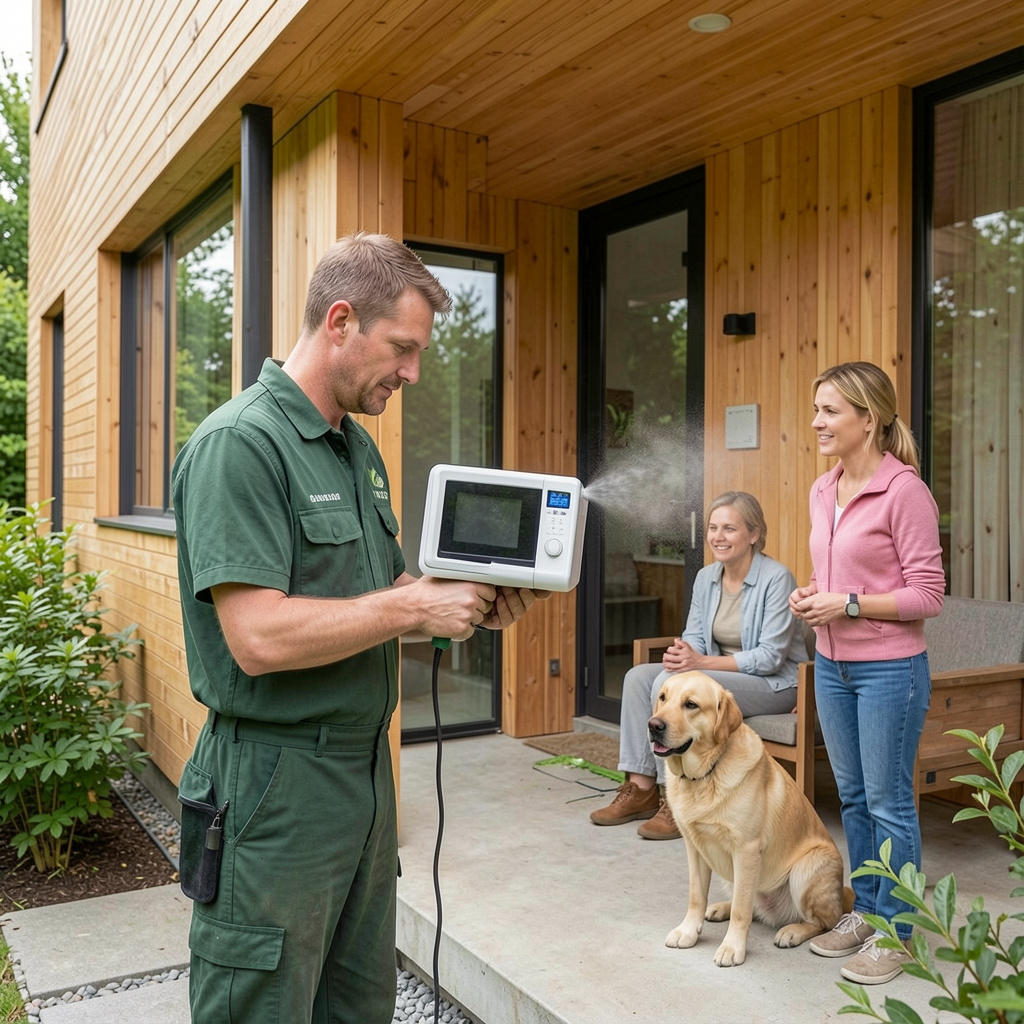
One increasingly popular chemical-free solution is microwave woodworm treatment.
Professional microwave equipment uses dielectric heating to generate controlled heat inside timber. The process raises the internal temperature of the wood to levels designed to eliminate:
- Woodworm larvae
- Beetle eggs
- Pupae
- Adult wood-boring beetles
Benefits
- Chemical-free
- No pesticide residues
- Localized treatment
- Environmentally responsible
- Suitable for many heritage buildings
- Helps preserve original structural timber
When used alongside moisture control and good ventilation, microwave treatment can form part of a comprehensive timber preservation strategy.
Ventilation Improvement Checklist
To help protect your home:
- Open windows regularly when possible.
- Use extractor fans during cooking and showering.
- Maintain gutters and downpipes.
- Repair leaks without delay.
- Improve attic and crawl space ventilation.
- Monitor indoor humidity.
- Keep air vents clean and unobstructed.
- Inspect timber annually for signs of moisture.
These simple habits can significantly reduce the risk of mold and moisture-related timber problems.
Poor Ventilation vs. Good Ventilation
| Poor Ventilation | Good Ventilation |
|---|---|
| High indoor humidity | Balanced humidity levels |
| Increased condensation | Reduced condensation |
| Greater risk of mold growth | Drier indoor environment |
| Slower drying of timber | Faster moisture evaporation |
| Conditions that may favor some wood-boring insects | Healthier conditions for wooden structures |
Common Mistakes to Avoid
Avoid these common errors:
- Ignoring condensation on windows.
- Blocking air vents with furniture.
- Drying clothes indoors without ventilation.
- Delaying repairs after leaks.
- Painting over mold without fixing the moisture source.
- Neglecting regular inspections of roof spaces and crawl spaces.
Preventive maintenance is always more effective than repairing long-term damage.
Common Myths About Ventilation, Mold, and Pests
Myth 1: Poor Ventilation Directly Causes Woodworm
Fact: Poor ventilation does not directly cause woodworm. However, the increased moisture associated with inadequate airflow may create conditions that are more suitable for certain wood-boring beetle species.
Myth 2: Opening a Window Once a Day Is Always Enough
Fact: While natural ventilation helps, homes with persistent humidity may require extractor fans, dehumidifiers, or improved building ventilation systems.
Myth 3: Mold Only Develops in Old Homes
Fact: Mold can develop in buildings of any age whenever excess moisture and poor ventilation are present.
Conclusion
Poor ventilation plays an important role in creating the damp conditions that allow mold to develop and may contribute to an environment that is more favorable for certain wood-boring insects. Although ventilation itself does not directly cause these problems, managing indoor moisture is one of the most effective ways to protect timber and maintain a healthy home.Visit https://www.shashel.eu online for more details.
By improving airflow, repairing leaks promptly, monitoring humidity, and carrying out regular inspections, homeowners can significantly reduce the risk of mold, moisture damage, and pest-related deterioration.